
Slow Read Issue 2: On Control, Collapse, and Choosing What Matters
Life rarely goes according to plan, and that's okay.

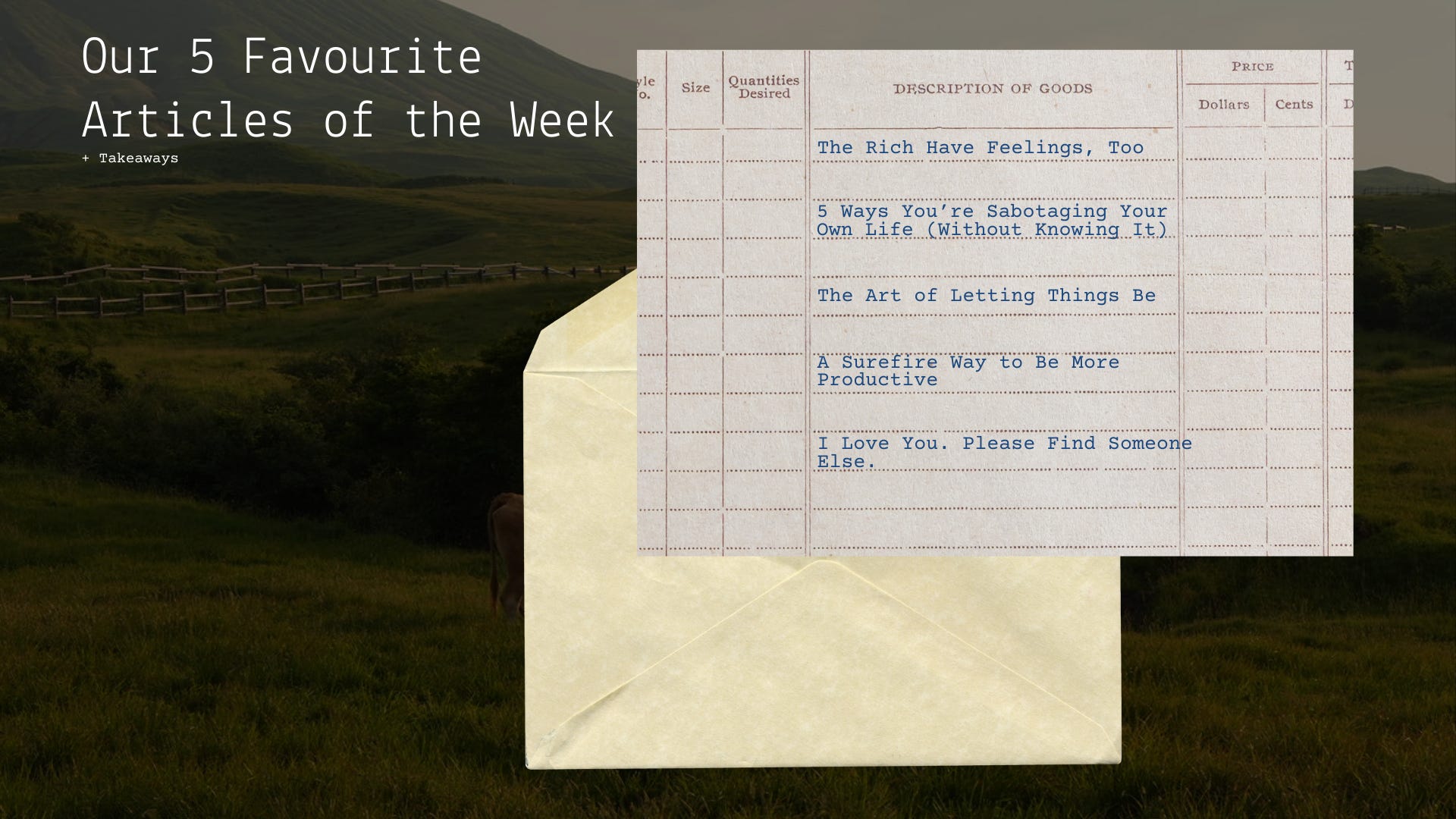
Mercury Retrograde has been TESTING us this week so naturally we had to find solace by gaining perspective. This week’s roundup is a meditation on what we hold onto—and what we learn to let go of. From financial elites clinging to lost status, to doctors redefining what it means to die well, each piece explores the cost of control and the grace that can come from surrender.
🧭 Quick Links:
🏰 Vanity Fair – The “Victims” of the Financial Crisis
Satirical Exposure of Wealthy Entitlement & Public Backlash
Key Takeaways:
Tom Wolfe skewers the absurdity of Wall Street elites mourning the loss of their private jets and club memberships after the 2008 crash. As the rich face regulation and public disdain, Wolfe turns their dramatic self-pity into dark comedy. A must-read for anyone who enjoys watching power structures squirm.
The Fall from Privilege Can Feel Like Tragedy The shift from private jets to commercial flights is depicted as a humiliating ordeal, revealing how those accustomed to luxury see even minor inconveniences as catastrophic losses.
Public Resentment Toward Financial Elites The article highlights how public opinion turned against corporate executives after the financial bailout, framing them as out-of-touch and undeserving of taxpayer assistance.
Government Intervention as a Humbling Force The satirical depiction of bureaucrats as "tarantulas" reflects the resentment of financial elites toward oversight, portraying regulation as a personal attack rather than a necessary accountability measure.
The Absurdity of Moral Outrage from the Wealthy By portraying financial executives as victims for losing their perks, the piece critiques the idea that extreme wealth should shield individuals from consequences, even after reckless financial decisions.
🧠 Cracked – 5 Ways You’re Sabotaging Your Own Life Without Knowing It
Self-Awareness, Habits, and Why Motivation > Methods
Key Takeaways:
A crash course in the real reasons we stay stuck: not because we lack tactics, but because we dodge discomfort, avoid sacrifice, and lie to ourselves about what we want. It’s a wake-up call—but one that comes with actionable insight.
Focusing on the How Instead of the Why: People don’t fail because they lack knowledge on how to improve; they fail because they aren’t fully committed to why they want to change. Methods are secondary—when the motivation is strong enough, the process becomes irrelevant. True progress starts with clarity of purpose, not another strategy.
Avoiding the Reality of Sacrifice: Growth requires trade-offs. Every new pursuit—whether learning a skill, building a career, or improving health—demands time and energy that must come from somewhere. The most successful people understand that they’re not adding goals to their life; they’re replacing old priorities with new ones.
Expecting Time to Magically Change You: The future is not a fresh start—it’s an accumulation of today’s choices. A decade from now, a person will not suddenly become disciplined, skilled, or successful unless they are actively building those traits in the present. Without daily action, dreams remain just that—dreams.
Becoming Overwhelmed by the Big Picture: Many people never start because they view a goal in its entirety rather than breaking it down into manageable steps. The weight of an entire journey can be paralyzing, but true progress comes from focusing only on what needs to be done today.
Lying to Yourself About What You Want: There’s a difference between wanting something and liking the idea of it. Many people claim they want success, fitness, or personal growth, yet their actions tell a different story. True desire is reflected in effort—what a person does daily reveals what they truly prioritize.
🌊 Ning Collective – The Art of Letting Things Be
Ancient Wisdom for Sustainable Success: Surrender, strategic inaction, and effortlessness as a virtue
Key Takeaways :
Inspired by the Taoist principle of Wu Wei, this piece makes a compelling argument for doing less—and doing it well. It’s not about giving up; it’s about releasing control, flowing with your strengths, and allowing growth to happen without constant strain. Perfect for anyone feeling burnout creep in.
Pushing Harder Isn’t Always the Answer Constant: Effort and over-preparation can be counterproductive. Wu Wei teaches that sometimes the best results come from allowing things to unfold naturally rather than forcing them.
True Progress Comes from Alignment, Not Struggle: Instead of constantly battling uphill, find where your natural strengths and passions lie. Flowing with life's rhythm, rather than against it, can create success with less resistance.
Letting Go of Control Can Lead to Unexpected Breakthroughs: The best ideas often come when we stop obsessing over them—whether it's creative inspiration in the shower or a solution emerging when we step back. Letting go creates space for clarity.
Strategic Inaction Can Be a Powerful Tool: Not every problem requires immediate action. Practicing deliberate pauses, patience, and observation can reveal when effort is unnecessary and when the best move is to wait.
Effortless Growth Is Possible When We Remove Self-Imposed Barriers: We often create unnecessary obstacles—waiting for perfect conditions, overthinking, or delaying action. Wu Wei encourages us to start where we are, even if we're unprepared, afraid, or imperfect.
⚰️ Zócalo – How Doctors Die
Mortality, intentional living, and redefining a “good death”
Key Takeaways :
Doctors often choose less aggressive treatment for themselves at the end of life. Why? Because they know that more interventions don’t always mean better outcomes. This piece forces us to ask: Are we chasing longevity at the expense of dignity and peace?
What Do We Truly Value in Our Final Days? : Doctors, despite having access to every possible treatment, often choose peace over intervention. If those who understand medicine best prefer dignity over medical heroics, what does that say about how the rest of us approach death? Are we chasing more time at any cost, or are we overlooking the importance of how we spend our final moments?
Are We Prepared for the Hardest Conversations?: Families are often forced to make life-altering decisions in moments of crisis, yet most of us avoid discussing end-of-life wishes until it’s too late. If we don’t clarify our values now, are we unintentionally leaving our loved ones with the burden of uncertainty and guilt?
Does Our Fear of Death Lead to More Suffering?: We live in a culture that resists the idea of mortality, treating it as something to be defeated rather than embraced. But in our desperation to extend life, are we actually prolonging suffering? Can we shift our perspective to see death not as a failure, but as a natural, inevitable part of life—one that deserves the same care and intention as how we live?
Are We Prioritizing Quantity Over Quality?: Medicine often measures success in extra days, months, or years, but does longevity always equate to a meaningful life? If given the choice, would we opt for aggressive interventions that leave us in pain and disconnected from the people we love, or would we choose fewer days filled with presence, joy, and dignity?
How Can We Redefine a ‘Good Death’?: The way we die matters—not just for us, but for those we leave behind. Doctors know this and make different choices for themselves. Instead of fearing death, can we reframe it as something to prepare for with intention, love, and agency? Would accepting our mortality earlier allow us to live more fully in the time we have?
💔 NYT Modern Love – “I Love You. Please Find Someone Else.”
Acceptance, illness, guilt, and the evolving definition of love
This deeply personal essay explores what happens when life takes a turn you didn’t ask for and how love can survive it. Vulnerable, raw, and ultimately hopeful, it reminds us that the most powerful kind of love is the kind that chooses to stay, even when everything else changes.
Chronic Illness Changes Everything—But Not Love Itself: Illness can strip away routines, dreams, and even self-identity, but it doesn’t erase love. The author’s wife, Lauren, reminded him that while his body had changed, who he was remained the same.
The Hardest Part of Sickness Is Losing the Life You Planned: Chronic illness doesn’t just affect health; it rewrites the future. The couple had to let go of dreams they once took for granted—travel, parenthood, spontaneity—learning instead to live in the present.
Guilt Can Be More Isolating Than the Illness Itself: The author pushed his wife away, believing she deserved someone “better” or “healthier.” But in doing so, he nearly sabotaged their relationship, proving that sometimes, love means accepting care rather than rejecting it.
Acceptance Is Harder Than Hope—But It’s Necessary: The turning point wasn’t finding a cure but shifting perspective. They stopped waiting for their "old life" to return and instead focused on managing the life they had—finding joy in small, steady moments.
Love Is a Choice, and So Is Letting It In: The most powerful moment comes when Lauren insists, "It’s not up to you to decide how much I can take. That’s my choice." Love, in sickness and in health, isn’t just about endurance—it’s about choosing each other, over and over again.
Closing note
Sometimes the best insights come when we pause long enough to listen to the absurdity of the world, the quiet truth of our habits, or the wisdom in letting go.
This week’s selection is a mix of sharp satire, grounded self-awareness, and gentle philosophy. You'll find reminders that life rarely goes to plan, and maybe that’s not such a bad thing.
Follow us on our journey to build introspective and intentional lives on TikTok and Instagram.